 Denys Rudenko
Babylon: a design system I also ship
denOS is a web-based operating system I design and build myself (React 19, Vite, Vercel, Redis): a desktop with windows, a dock and apps. Two of them I use every day, Memes for notes and PNGnation for references. Under all of it runs Babylon, the design system, set up so AI agents follow its rules instead of inventing new ones.
My role
- The whole thing, solo, for about two years: design, code, deployment and the rules that keep it consistent.
- Babylon, the design system: 35+ shared components, one theme consolidated from five, and a live showcase of every state.
- Two apps I use daily: Memes for notes and PNGnation for references, with its Chrome extension.
- Working rules for AI agents (Claude Code, Codex), so they extend the system instead of inventing new components.
A desktop in the browser, with apps on it
denOS works like an operating system: apps open in windows, sit in a dock and share one account, one search and one look. Each app is small and focused; the OS gives them the shell, the data layer and the design system, so a new app starts from a working desk instead of a blank page.
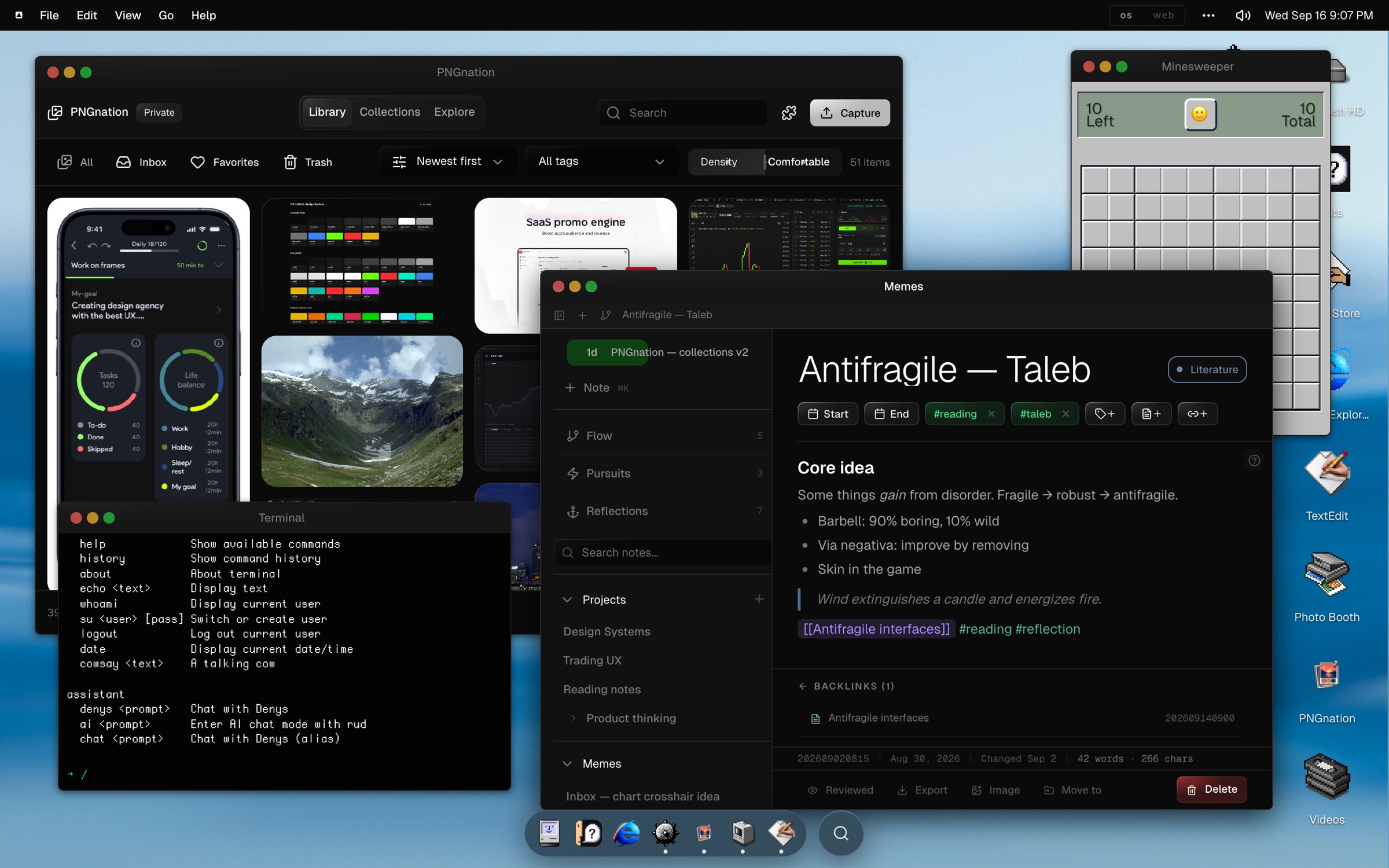
Memes: a notes app where notes link to each other
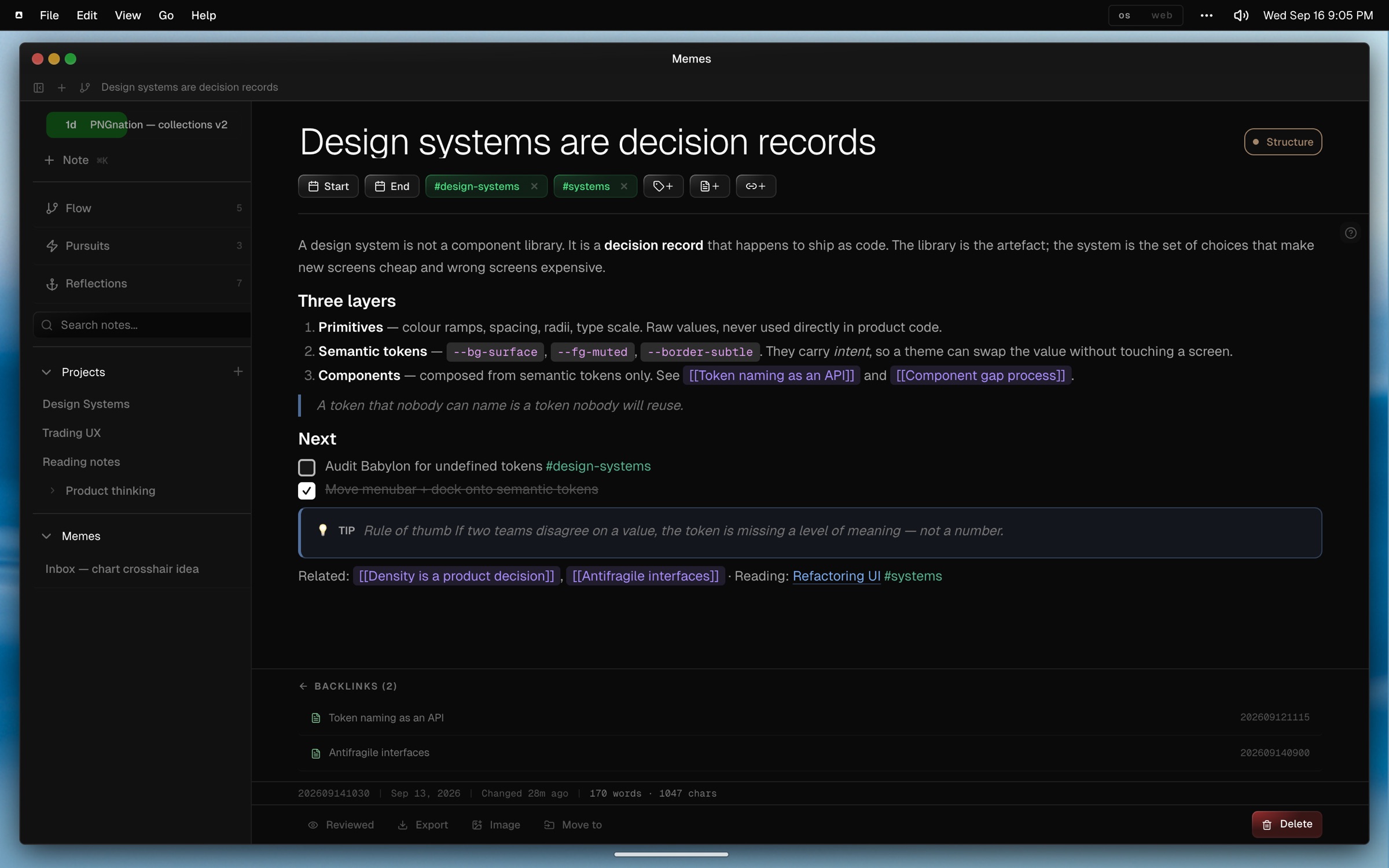
Memes (the name is a play on memory, not internet memes) is a notes app built on the Zettelkasten idea: short notes, tags and links between them, written in a rich editor that still stores plain markdown. The sidebar keeps what's in flow, what I'm pursuing and what I've reflected on, and Cmd+K finds any note in a keystroke.
- Markdown underneathA Tiptap editor with wiki links, embeds, callouts and tasks, stored as plain markdown you can export as a ZIP.
- Links both waysBacklinks on every note, a hover preview on every link, and notes that point at PNGnation references.
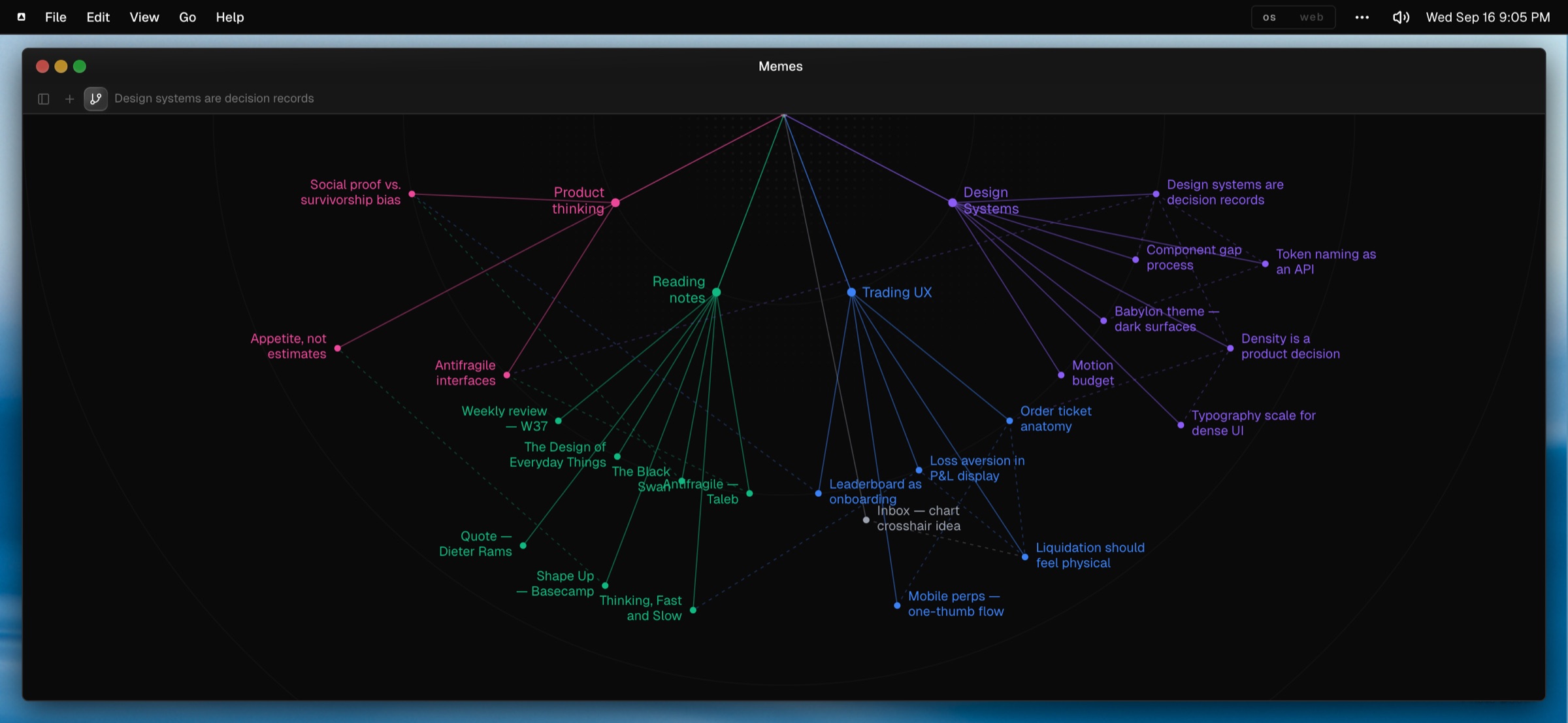
PNGnation: a reference library that fills itself
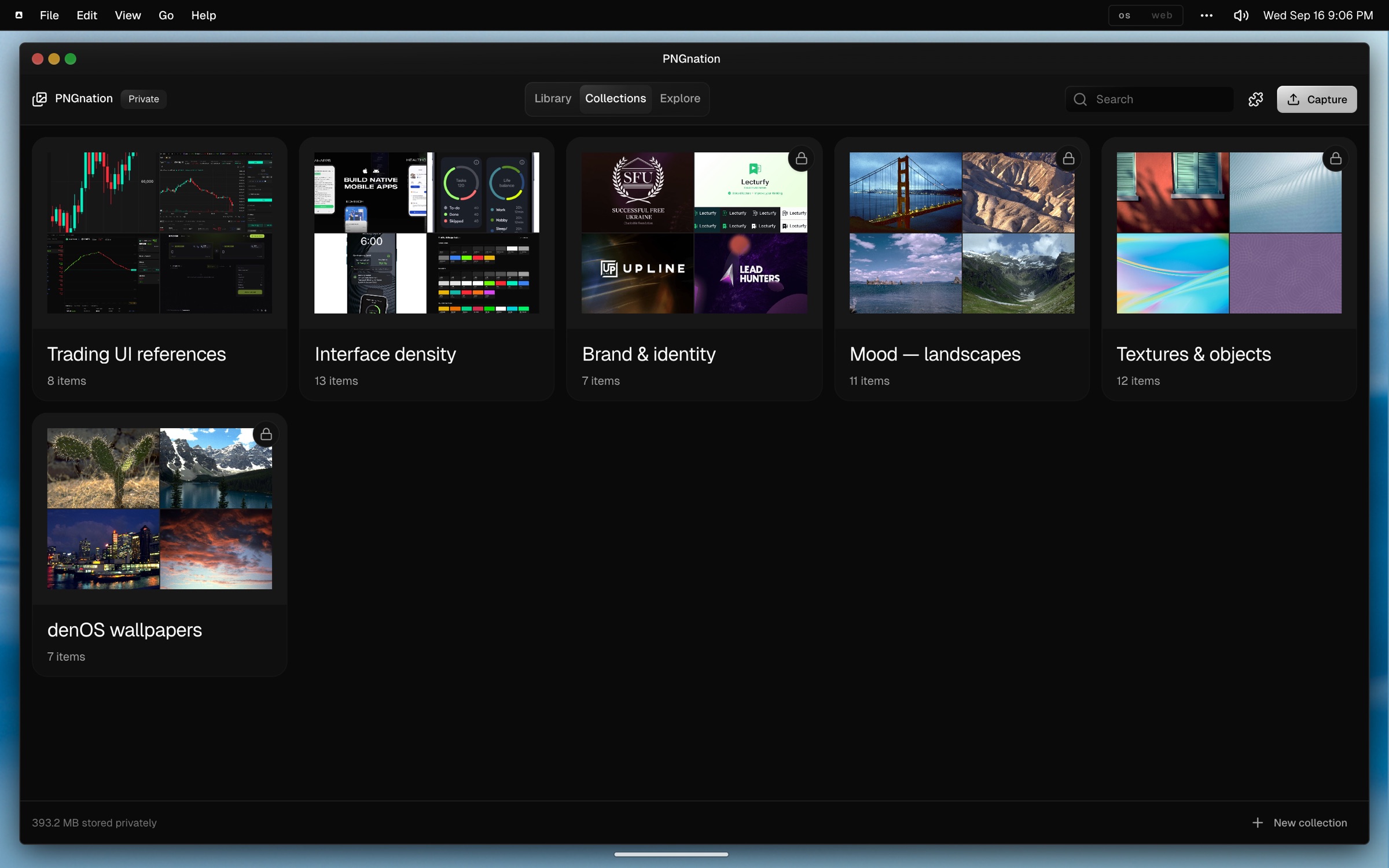
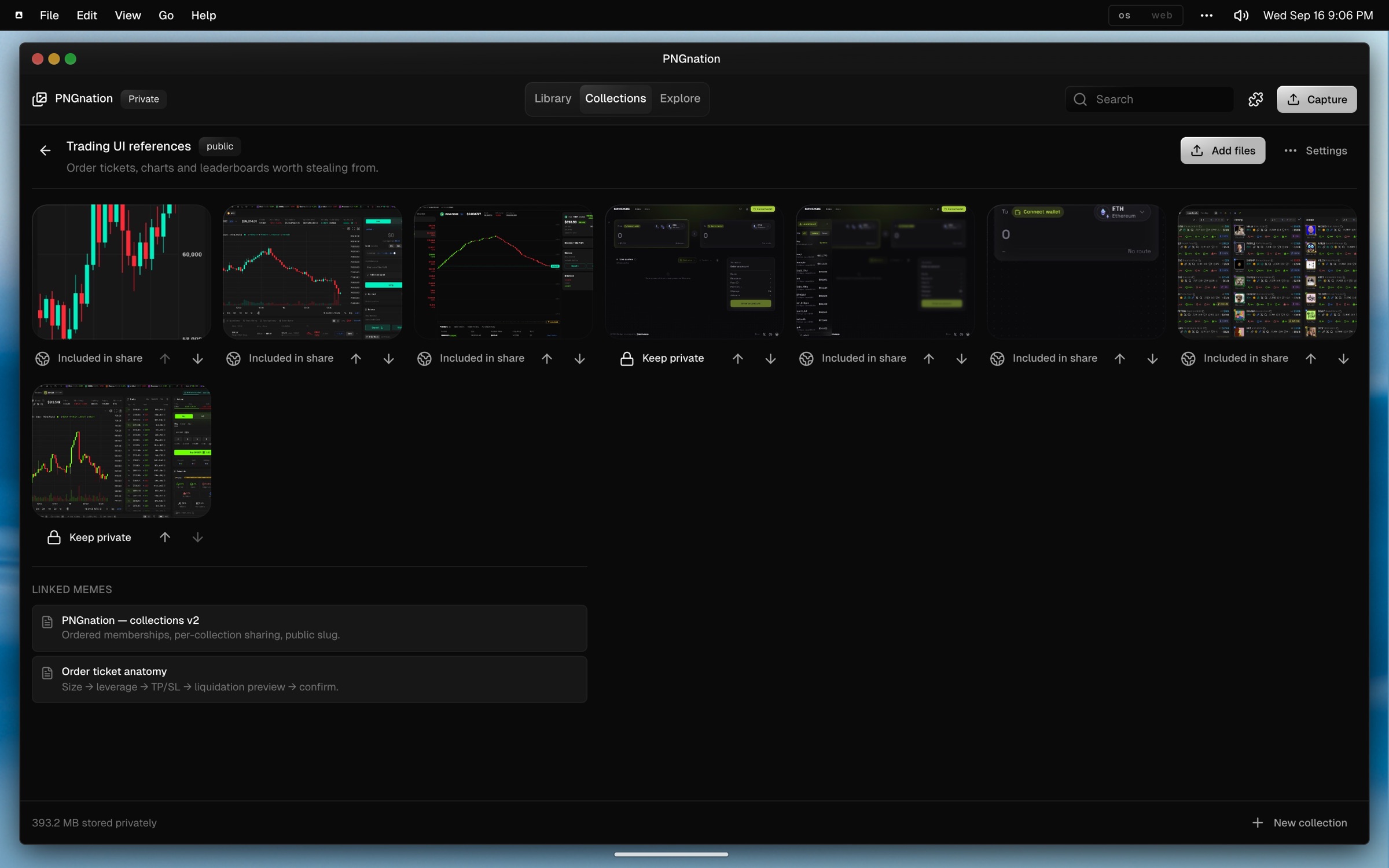
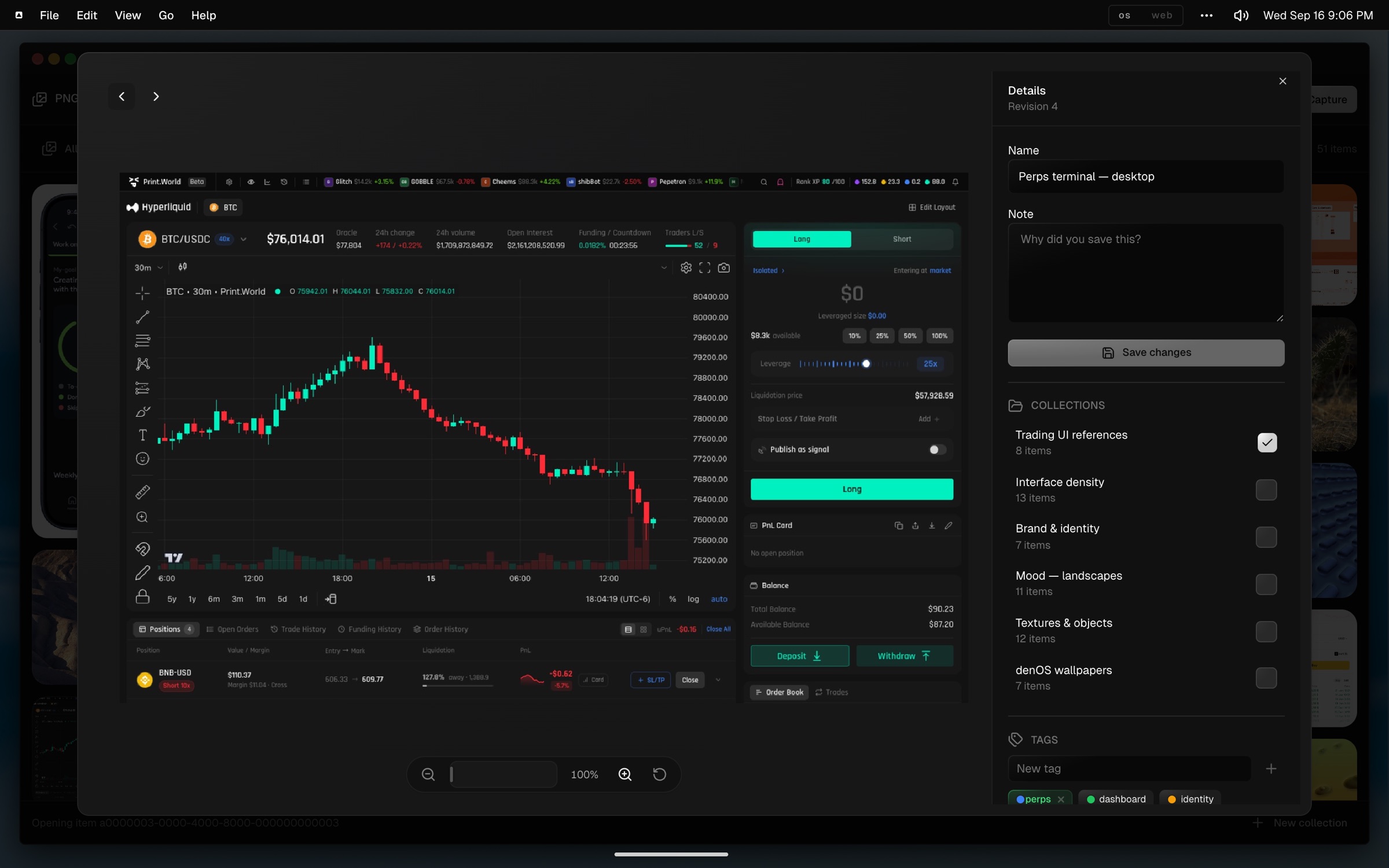
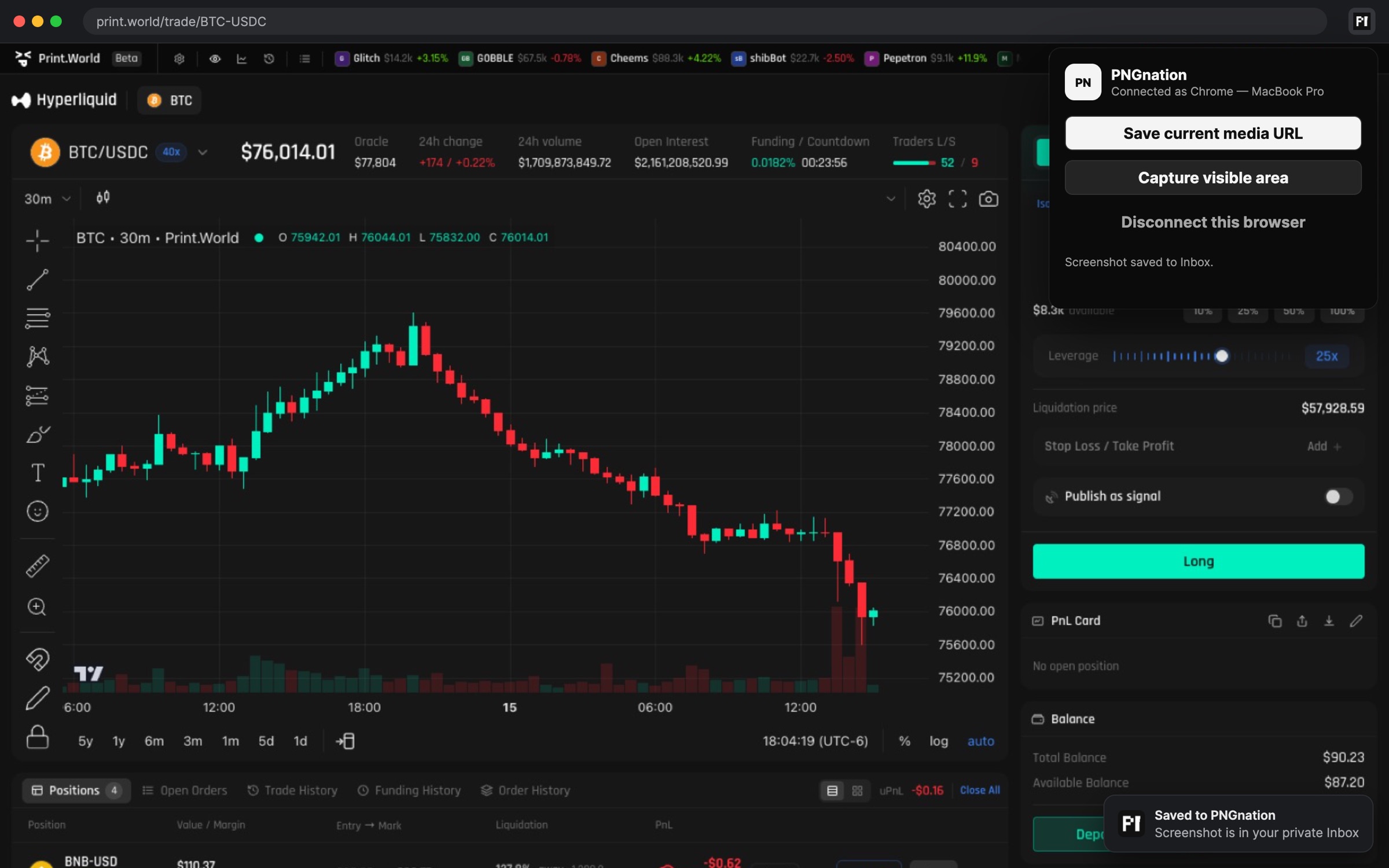
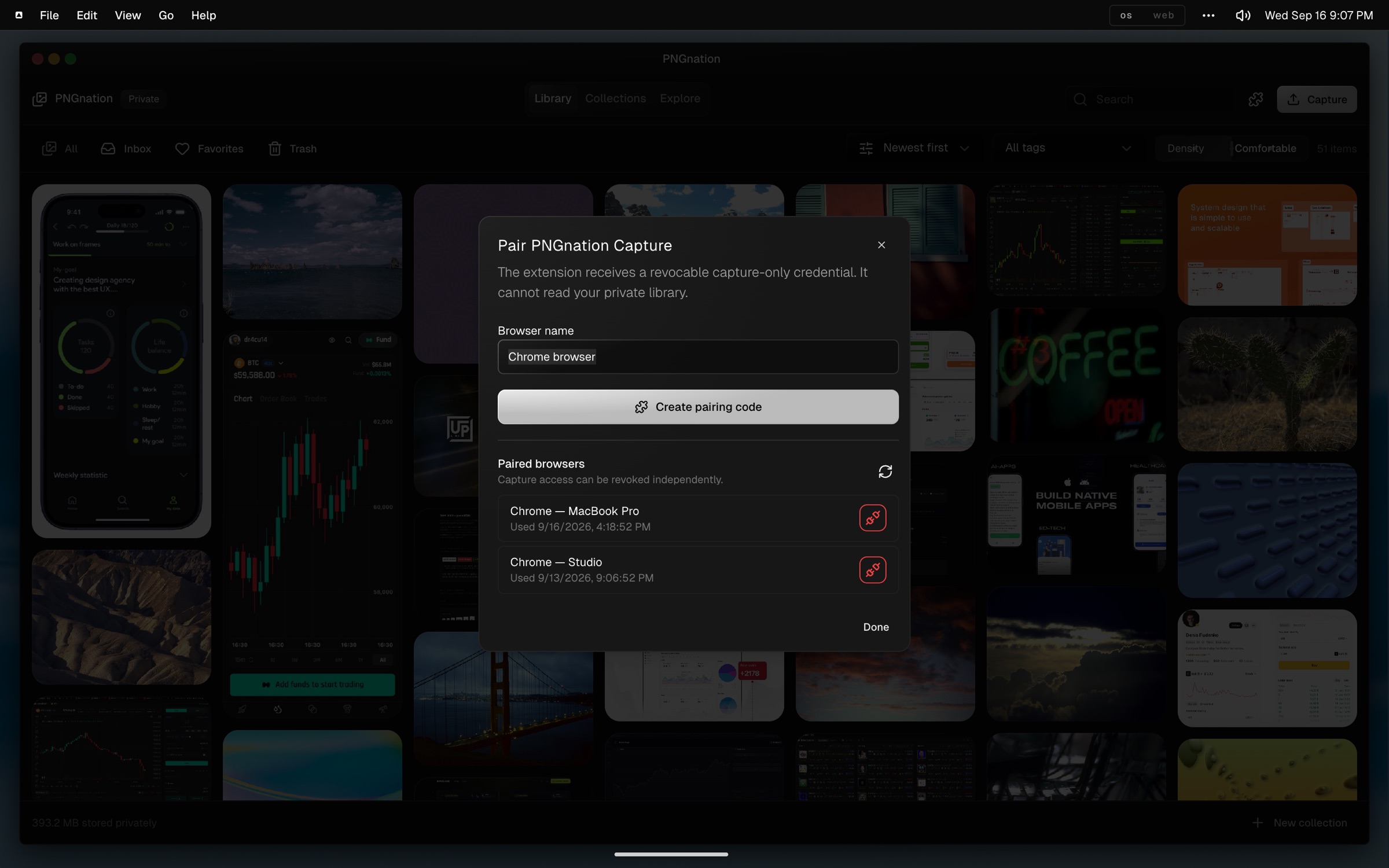
PNGnation is where references live: images, GIFs and videos in a private library, sorted into collections you can keep private or publish. A Chrome extension, paired with a one-time code and a capture-only token, saves anything from the web straight into the inbox. Inspiration stops living in forty browser tabs.
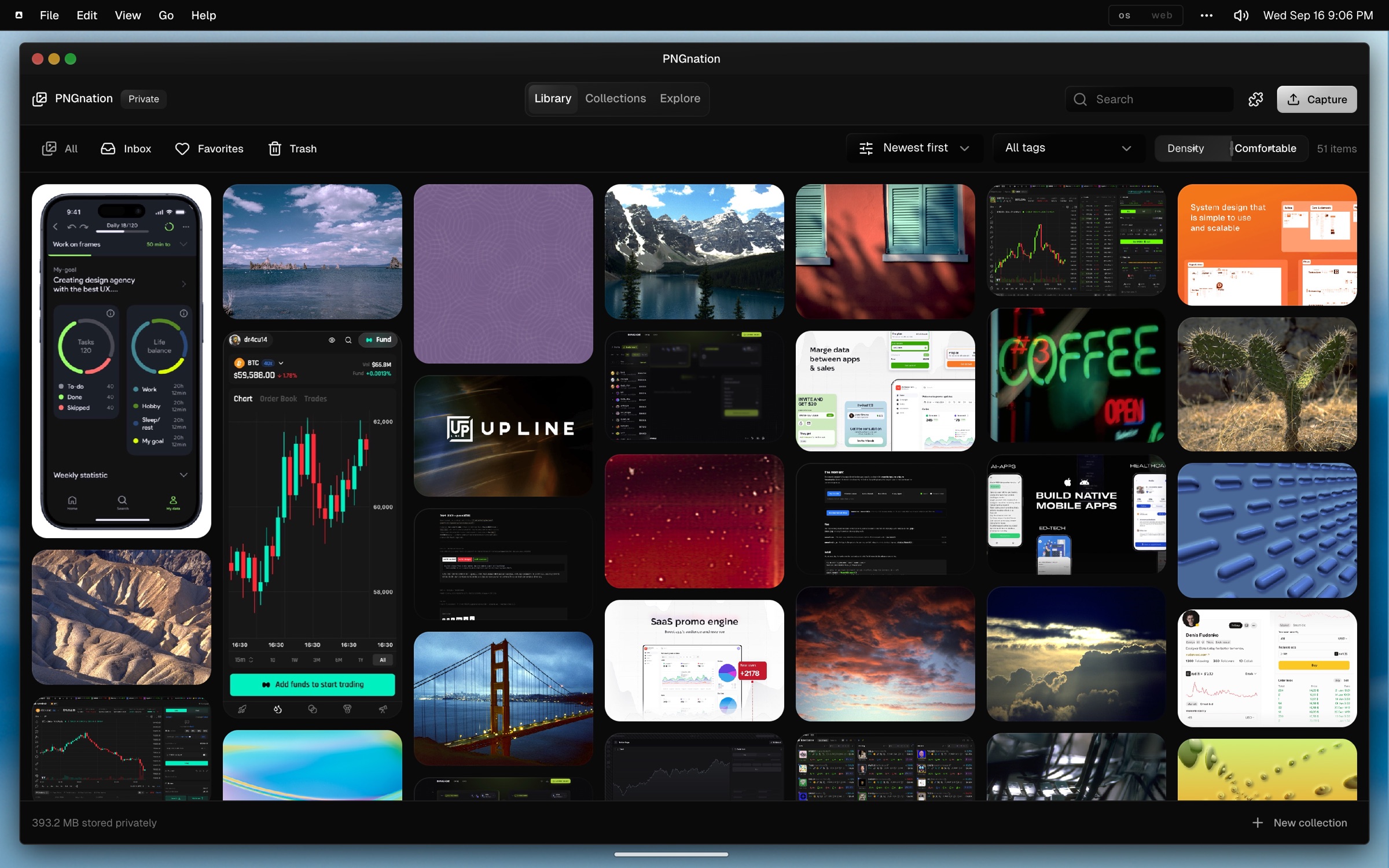
Everything else, on the same system
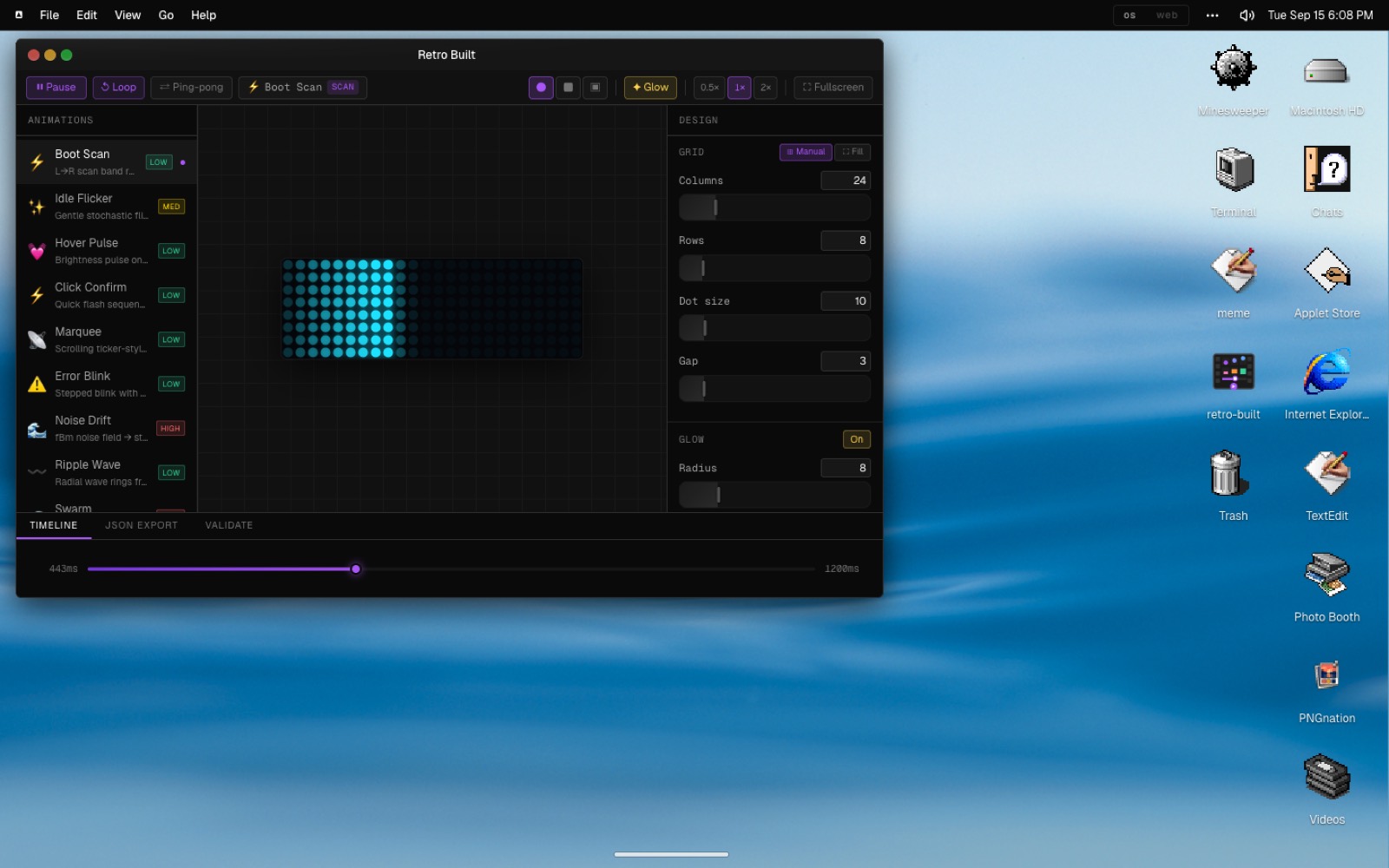
Around the two key apps sit smaller ones: Finder, a terminal with an AI chat mode, TextEdit, Paint, a synth and a soundboard, a CSS keyframe animation builder, the design system browser and a few games. They are how the system gets tested: every new app is a new chance for a component to break, and a reason to fix it once, for everyone.
Consolidate before you decorate
denOS started with five retro themes and plenty of hardcoded values. I cut it down to one theme, Babylon, moved tokens into Tailwind's theme layer, and unified the hex and OKLCH colour layers into one set of semantic tokens.
Babylon, every state on one page
These are the production components from denOS, rendered live in their v3 skin: actions, inputs, surfaces, data and motion, every variant, appearance and state side by side, the way the system is reviewed.
Rules first, new components last
Before anyone, human or AI agent, creates a component, they walk a fixed order: reuse an existing component, then a variant of it, then a composition, and only at the end a new one, with a written review. UI is sorted into six levels, from foundations to one-off artwork.
- 01Rules agents can readA short routing file sends each task to the one note it needs, so Claude Code and Codex follow the system too.
- 02One way inApps import components only through the system's front door; reaching inside it fails review.
- 03Automatic checksScripts check the tokens and compare visual snapshots between builds, so drift is caught before it ships.
- 04Design in the real UIA local lab edits the theme inside the running product and promotes what works into the theme file. The system is also mirrored to Figma and synced back.
What it proves
One designer can own a system end to end, from tokens to production, and set up AI agents to follow it instead of working around it. That is the same way I work on client products: the rules and the QA are part of the design.